What the Latest Creatine Research Actually Found
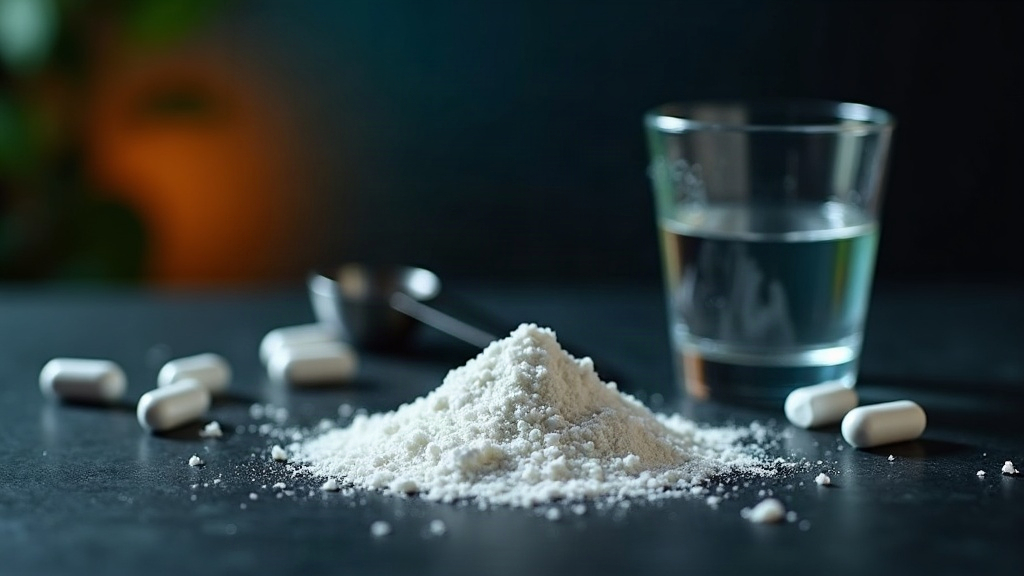

Recent creatine research has expanded the conversation into brain health, aging, women's health, and even cardiovascular markers. The 2025-2026 literature confirms creatine monohydrate is safe long-term, that brain dosing likely runs higher than the classic 5g muscle dose, and that people with lower dietary creatine intake such as vegetarians and older adults tend to benefit most. A few studies are also exploring creatine's role in cardiometabolic health, with early but intriguing findings.
Creatine has been one of the most studied supplements for decades, mostly in the context of strength and power sports. The last 18 months changed that framing considerably. New creatine research from 2025 and 2026 is pulling the compound into conversations about brain health, aging, women's physiology, and cardiovascular markers. Here is an honest look at what the latest studies actually found, what it means for supplementation decisions, and where the evidence still has gaps.
What did the newest brain and cognition studies find?
The most discussed findings from the latest creatine research involve cognitive performance, especially under conditions where the brain is under pressure. A study published in late 2024 replicated and extended earlier work showing that a single high creatine dose helped people maintain working memory and processing speed through 21 hours of sleep deprivation. The phosphocreatine buffer in the brain held up better in the creatine group, and the effect was visible on brain imaging.
A follow-up trial with a lower dose during similar sleep conditions found a smaller but still meaningful effect: roughly 10 to 14 percent better performance on numerical and logical reasoning tasks. The takeaway is that the brain-creatine relationship appears dose-dependent, and the classic 5g muscle dose may not be enough to fully saturate brain creatine stores.
Beyond sleep, a 2025 meta-analysis covering 17 trials found that creatine consistently improved measures of memory and processing speed in older adults, particularly those over 65. The effect size was small to moderate, but the consistency across studies is notable. For the deeper background on the brain mechanism and who benefits most, see our earlier breakdown: Creatine for Brain Health: What the New Research Actually Shows.
What did recent research find about creatine and women?
Not sure if your supplements and medications play well together? Flexwell automatically checks your full stack for interactions, flags combinations worth knowing about, and gives you a clear list to bring to your doctor or pharmacist. Check your interactions →
One of the notable shifts in the 2024-2026 literature is increased attention to creatine in women, a population underrepresented in earlier sports science research. Several trials and a 2025 review specifically examined women's responses, with a few findings worth noting.
Women appear to have lower baseline muscle creatine concentrations than men on average, which could mean more room to benefit from supplementation. The cognitive and recovery effects seen in women's-only trials look comparable to those in mixed or men's trials. Researchers also flagged the peri- and post-menopausal window as a period where creatine may matter more, since estrogen normally helps maintain creatine synthesis, and that support drops during menopause.
None of this means creatine is a targeted women's supplement. It means the research base is finally catching up to including women properly, and the picture that emerges is that the benefits extend across sexes.
What did new studies find about creatine safety?
Long-term safety has always been the quiet question hovering over creatine, largely because the muscle-building crowd takes it for years at doses above what food provides. A comprehensive safety review published in 2025, covering clinical trial data and long-term observational follow-up, found no evidence of kidney damage or other organ-level harm in healthy adults at doses of 3 to 10g daily.
The review did reiterate the standard caution: people with pre-existing kidney conditions or single-kidney situations should not take high-dose creatine without medical supervision. Serum creatinine (a standard kidney marker) does rise with creatine supplementation in healthy people, which can look alarming on a panel, but this reflects the metabolic pathway of creatine itself rather than kidney damage. The distinction matters when reading lab results.
Is there anything new on creatine and cardiovascular health?
This is the most preliminary part of the 2025-2026 literature. A small number of trials looked at whether creatine supplementation influenced cardiovascular markers like blood pressure, arterial stiffness, and inflammatory markers. Results were mixed, with some trials finding modest improvements and others finding no effect.
Mechanistically, the connection is plausible: creatine plays a role in ATP regeneration in cardiac muscle the same way it does in skeletal muscle, and some researchers have pointed to homocysteine-lowering as a potential secondary pathway. The honest read is that this is an interesting signal, not an established effect. The brain and aging work has a far more solid evidence base right now.
What form of creatine does the research actually support?
Every few years a new creatine form gets marketed with claims of superiority: creatine HCl, buffered creatine, creatine ethyl ester, the list goes on. The 2025-2026 research did not change the consensus here. Head-to-head trials comparing these forms to creatine monohydrate consistently find monohydrate is equivalent or better, and it remains the most studied compound across decades of work.
If you see a supplement priced significantly above monohydrate for a novel form, the current research does not support paying that premium.
How do you tell if creatine is actually doing anything for you?
This is the honest practical gap in the research: individual responses vary, effects build over weeks, and self-reported "focus" or "energy" are noisy. A bad night's sleep or a stressful afternoon swamps the signal. Most people cannot reliably tell from feel alone whether a supplement is working.
Tracking changes that too. Flexwell lets you log your creatine dose and timing, rate daily energy and cognitive clarity, and connect an Apple Watch or Oura Ring to pull in sleep quality and HRV alongside your stack. Over four to eight weeks the pattern in your actual data tells you more than any single good or bad day. Flexwell also flags interactions if you are taking creatine alongside medications or other supplements, so you are not guessing at what might be interfering.
If you are also weighing creatine against other evidence-backed options for cognition, our comparison of Lion's Mane vs. Creatine for Brain Health walks through the evidence side by side.
The bottom line on the latest creatine research
The new creatine literature is filling in gaps more than overturning the core story. Creatine monohydrate is safe at typical doses, benefits extend meaningfully into brain health and aging, and women's health is a legitimate area of expanding interest. The biggest practical update is that brain effects likely require doses above the standard 5g, and the effect is most reliable in people who start with lower creatine stores: vegetarians, older adults, and those under physical or cognitive stress.
As with most supplements, the research supports a conditional "yes" rather than a blanket one. Who you are, what you eat, and what outcome you are targeting all shape how much you stand to benefit.
Flexwell is a wellness tracking tool and does not provide medical advice, diagnosis, or treatment. Always consult a qualified healthcare provider before making changes to your supplements or medications.
Frequently Asked Questions
What did the latest creatine studies find?
Recent studies found that creatine supports brain energy during sleep deprivation, may improve cognitive performance in older adults, and that long-term use at typical doses appears safe. The research also points to higher doses for brain effects than the classic 5g used for muscle.
Does new research support creatine for women?
Yes. Several 2024-2026 studies specifically looked at creatine in women, finding similar cognitive and recovery benefits to those seen in men, with some evidence that peri- and post-menopausal women may benefit particularly due to changes in creatine metabolism during that life stage.
Is creatine safe long-term according to new research?
A 2025 safety review covering years of follow-up data found no evidence of kidney damage or other adverse effects in healthy adults at typical doses of 3-10g daily. Anyone with existing kidney conditions should still check with a doctor first.
What is the best form of creatine according to current research?
Creatine monohydrate remains the most studied and best-supported form. Newer marketed forms like creatine HCl and buffered creatine have not outperformed monohydrate in head-to-head trials. The research consensus is to use monohydrate and spend the savings on something else.
How much creatine do you need for brain benefits?
Most brain studies used doses above the standard 5g. Research on acute cognitive support during sleep deprivation suggests doses of roughly 10g or higher, while some researchers discuss 0.1g per kilogram of body weight daily as a practical brain-focused target. Consult a healthcare provider to dial in the right amount for you.
See what's actually working
Flexwell tracks your supplements and medications, connects your wearable data, and shows you the real impact on your sleep, energy, and recovery. Stop guessing, start seeing.
See your impactRelated reading

The New Vitamin D Guidelines: What Changed
In 2024, the Endocrine Society released updated clinical practice guidelines on vitamin D, significantly revising who…
Turmeric and Antidepressants (SSRIs): What to Know Before Combining Them
Turmeric (curcumin) has shown antidepressant-like effects in research, which raises meaningful interaction questions…
Turmeric and Metformin: Interaction, Timing, and What the Research Shows
Turmeric and metformin share a blood-glucose-lowering mechanism, which creates a potential additive effect worth…