Lion's Mane vs. Creatine for Brain Health: What the Evidence Actually Shows
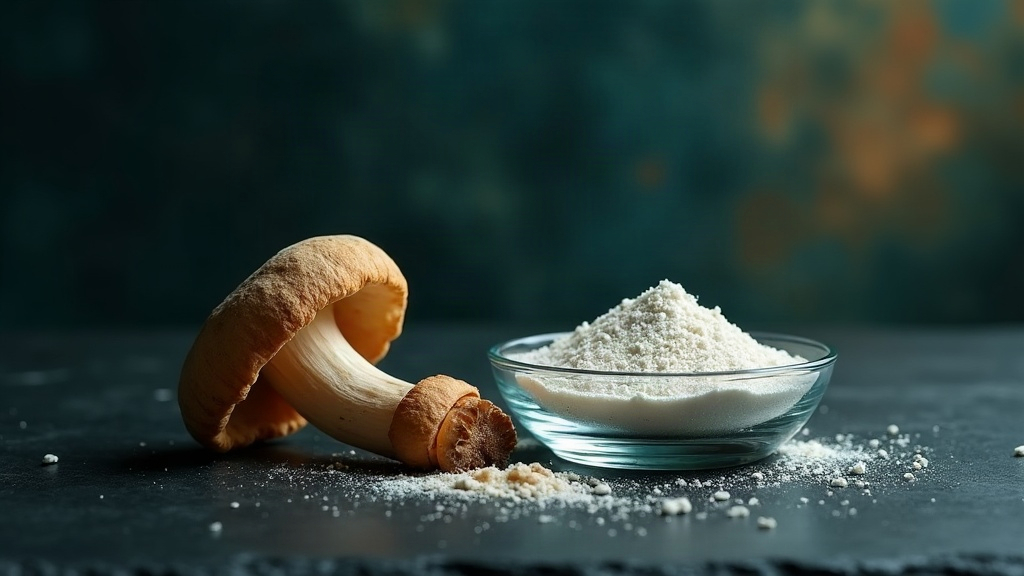

Creatine replenishes brain ATP and a 2024 meta-analysis of 16 human trials confirmed statistically significant memory improvements. Lion's mane stimulates nerve growth factor and suits long-term neuronal maintenance, but new 2025 research shows no acute effect in healthy young adults and effects require four to eight weeks minimum. Using both covers complementary angles with no known interaction. Neither is medical treatment.
Lion's mane and creatine are two of the most-discussed supplements for brain health, but they are frequently grouped as if interchangeable. They are not. New 2024 and 2025 research has sharpened our understanding of what each actually does, who benefits most, and what combining them looks like in practice.
The short answer: what lion's mane and creatine each do for the brain
Creatine supports brain energy metabolism and a 2024 meta-analysis of 16 randomized controlled trials confirmed statistically significant memory improvements. Lion's mane stimulates nerve growth factor and suits a longer-term approach to neuronal maintenance and neuroplasticity. Creatine works within days to two weeks; lion's mane takes four to eight weeks minimum and shows no acute single-dose effect. Both are low-risk, and using them together is reasonable because they target different aspects of brain health. Neither is a treatment for any medical condition.
Why comparing them directly is tricky
Not sure if your supplements and medications play well together? Flexwell automatically checks your full stack for interactions, flags combinations worth knowing about, and gives you a clear list to bring to your doctor or pharmacist. Check your interactions →
Lion's mane vs creatine comparisons often disappoint because the two were never really competing for the same job. They address different sides of what brain health depends on:
- Energy availability: neurons are high-energy consumers. They need a constant ATP supply to fire reliably, especially under sustained cognitive load or stress.
- Structural maintenance and growth: neurons also need an environment that supports long-term growth, repair, and communication through neuroplasticity.
Creatine targets the first lever. Lion's mane targets the second. This distinction makes the comparison much more useful and explains why many researchers describe them as complementary rather than competing.
Creatine for brain health: what the 2024 evidence shows
Creatine is best known as a muscle supplement, but its role in brain health is equally well-documented. The brain is one of the highest energy-consuming organs in the body. It uses creatine to regenerate ATP through the phosphocreatine system, particularly during periods of high cognitive demand.
The 2024 meta-analysis: A comprehensive systematic review and meta-analysis published in 2024 analyzed 16 randomized controlled trials involving nearly 500 participants. It found statistically significant improvements in memory with creatine supplementation, with moderate certainty of evidence. It also showed improvements in attention time and processing speed, though with lower certainty. The review did not find significant improvements in overall cognitive function or executive function, which is a useful nuance: creatine's brain benefits are specific to memory and fatigue-related performance rather than a blanket cognitive enhancer.
A 2021 study in Scientific Reports (Sandkuhler et al.) found creatine supplementation partially offset cognitive decline from acute sleep loss, supporting sustained attention and reaction time in sleep-restricted participants. For high-output people running on insufficient sleep, this is a practically relevant finding.
The vegetarian population matters too: dietary creatine comes almost entirely from meat and fish, so vegetarians and vegans have substantially lower baseline brain creatine levels and therefore more room to benefit.
Standard cognitive research doses: 3 to 5 grams of creatine monohydrate daily. No loading phase is needed for brain benefits. The same dose that supports muscle research covers cognitive performance, making creatine unusually efficient as a dual-purpose supplement.
Who benefits most from creatine for brain health:
- Vegetarians and vegans (lower baseline brain creatine = more to gain)
- People regularly operating under sleep deprivation
- High-output knowledge workers under sustained cognitive load
- Athletes who also want cognitive support from the same supplement
- Older adults, where a 2025 systematic review noted positive associations with memory
For a deeper look at the current creatine research, see what the latest creatine research actually found and creatine for brain health.
Lion's mane for brain health: what the 2025 evidence shows
Lion's mane (Hericium erinaceus) approaches brain health from the structural side. Its bioactive compounds, hericenones (in the fruiting body) and erinacines (in the mycelium), stimulate the synthesis of nerve growth factor (NGF) and brain-derived neurotrophic factor (BDNF). These are proteins essential for neuron survival, growth, and new synaptic connections.
The most cited human trial remains the 2009 Mori et al. study in Phytotherapy Research, where adults with mild cognitive impairment who received lion's mane for 16 weeks showed significantly higher cognitive function scores than placebo, with improvement reversing four weeks after stopping.
New 2025 research adds important nuance. A double-blind, placebo-controlled crossover study in healthy young adults found no significant acute improvement in overall cognition or mood from a single dose of lion's mane. This is not a failure of the supplement, it is a confirmation of how it works: NGF accumulation is a slow process, not a same-day effect. A separate 2023 pilot study (published late 2024) found modest improvements in cognitive processing speed and stress in young adults after four weeks, but not acutely.
A 2025 systematic review of lion's mane supplementation found a small average increase in cognitive scores across two trials in cognitively impaired populations. Evidence in healthy adults under 40 remains promising but thinner than for creatine.
Quality matters more with lion's mane than most supplements. Look for products that specify hericenone and erinacine content, or are standardized to these active compounds. Many products use mycelium grown on grain substrate, which dilutes the active compound concentration. Research doses typically range from 500 milligrams to 3 grams of whole fruiting body extract daily.
Who benefits most from lion's mane for brain health:
- Those taking a long-term approach to neuroplasticity and neuronal maintenance
- Older adults interested in age-related cognitive support
- People noticing gradual changes in recall or processing speed they want to address over months
- Anyone building a multi-angle brain health strategy alongside sleep, exercise, and omega-3 intake
Lion's mane and creatine together: the stack
This combination is increasingly popular because the two supplements are mechanistically non-overlapping. There is no known interaction between lion's mane and creatine.
The practical logic is straightforward: creatine covers the energy supply side of brain function starting within days. Lion's mane covers the structural maintenance and neuroplasticity side starting after four to eight weeks. Running both means you are not waiting empty-handed during the lion's mane accumulation window.
Large-scale studies on the direct combination do not yet exist, but the two mechanisms are so distinct that a synergistic effect is plausible. The current evidence base for each individually is stronger than most combined supplement research you will find.
A basic brain health stack protocol:
- Creatine monohydrate: 3 to 5 grams daily, any time (dissolves easily in coffee or water)
- Lion's mane fruiting body extract: 500 milligrams to 1 gram daily, morning or with food
- Commit to at least eight to twelve weeks before evaluating lion's mane effectiveness
- Track sleep quality alongside supplementation since sleep independently affects cognitive scores
Head-to-head: lion's mane vs creatine comparison
| Factor | Creatine | Lion's Mane | |---|---|---| | Primary mechanism | ATP regeneration (brain energy) | NGF + BDNF stimulation | | Brain health target | Performance under cognitive load | Neuronal maintenance, plasticity | | Evidence strength (2025) | Strong, 2024 meta-analysis confirmed memory benefit | Moderate, improving but thinner for healthy adults | | Onset time | Days to 2 weeks | 4 to 8 weeks minimum | | Acute single-dose effect | Yes | No (2025 study confirmed) | | Best fit | Fatigue resistance, vegetarians, knowledge workers | Long-term neurological maintenance | | Cost | Low | Moderate | | Interaction risk | Very low | Very low | | Works faster? | Yes | No | | Better long-term play? | Secondary | Primary |
Who should use which
Use creatine if:
- You want near-term support for mental fatigue, working memory, or focus under pressure
- You eat little or no meat (vegetarian or vegan)
- You are regularly under sleep pressure
- You want one supplement that supports both physical performance and cognitive function
- You want the supplement with the largest and most consistent human trial evidence base
Use lion's mane if:
- You are taking a long-term approach to brain health and neuroplasticity
- You are interested in neuronal maintenance as you age
- You want to complement sleep, exercise, and other lifestyle factors with a targeted NGF-stimulating supplement
- You are willing to commit for at least two to three months before evaluating results
Use both if:
- You want coverage across both brain energy metabolism and neuronal maintenance
- You have no budget or tolerance constraints that make running two supplements impractical
- You want a broader brain health stack without interaction risk
For additional context on evaluating supplement combinations and potential conflicts, see supplements you should not take together and supplements for brain fog.
The practical problem: knowing whether either is working
Cognitive supplements are genuinely hard to assess by feel alone. Sleep quality, stress, caffeine, hydration, and alcohol all shift perceived sharpness day to day, and those variables easily mask or mimic a supplement effect. Starting lion's mane and feeling sharper three weeks later could be the NGF stimulation, or it could be better sleep that week.
A useful approach: introduce one supplement at a time, commit to at least four to six weeks at a consistent dose, and track both objective and subjective markers. Wearable data, sleep scores, daily focus ratings, and consistent note-taking all help you look back at real signal rather than a hazy impression of whether things felt different.
Flexwell is designed for this kind of tracking. Log your creatine or lion's mane, set consistent daily reminders, and use the wearable correlation features to see whether objective markers like sleep quality or HRV shift alongside subjective clarity. The app also flags potential interactions with medications before you start, which is worth checking before adding any new supplement to your routine. If you are stacking lion's mane and creatine together, logging both helps you isolate which might be driving changes you notice over the weeks.
These statements have not been evaluated by the Food and Drug Administration. This article is for informational purposes only and is not intended to diagnose, treat, cure, or prevent any disease or health condition.
Frequently Asked Questions
Is lion's mane or creatine better for brain health?
Creatine has stronger, more consistent human trial evidence for near-term cognitive performance. A 2024 meta-analysis of 16 randomized controlled trials confirmed statistically significant memory improvements with creatine. Lion's mane targets nerve growth factor and longer-term neuronal maintenance, but evidence in healthy adults is thinner and effects take four to eight weeks minimum. Which is better depends on your goal: creatine for day-to-day mental performance under load, lion's mane for a longer-term neuroplasticity approach.
What is the main difference between lion's mane and creatine for the brain?
Creatine works on brain energy metabolism, specifically replenishing ATP so neurons can fire reliably under cognitive load. Lion's mane works on the structural side, stimulating nerve growth factor (NGF) and brain-derived neurotrophic factor (BDNF) to support neuron maintenance and growth. Different mechanisms, different timelines, different best-fit populations.
Can you take lion's mane and creatine together?
Yes. They work through completely different pathways and there is no known interaction between them. Combining both is a reasonable approach for people who want to support both short-term cognitive performance and longer-term neuronal maintenance. This is increasingly referred to as a brain health stack.
Does creatine help with brain fog and focus?
Several human trials and a 2024 systematic review and meta-analysis show creatine supports working memory, mental fatigue resistance, and processing speed, particularly in people who are sleep-deprived or who eat little to no meat. The effect is most pronounced under cognitive load.
How long does lion's mane take to work for brain health?
Lion's mane accumulates over time. Most human trials run eight to twelve weeks. People who notice changes typically report improvements after four to eight weeks of consistent daily use. Importantly, a 2025 double-blind study showed no significant acute effect from a single dose in healthy young adults, so short-term trials are unlikely to show results.
What does the 2024 creatine brain health meta-analysis show?
A 2024 systematic review and meta-analysis of 16 randomized controlled trials involving nearly 500 participants found statistically significant improvements in memory with creatine supplementation, with moderate certainty of evidence. It also showed improvements in attention time and processing speed, though with lower certainty. The review did not find significant improvements in overall cognitive function or executive function.
What dose of creatine helps brain health?
Most cognitive research uses 3 to 5 grams of creatine monohydrate daily. No loading phase is required for brain benefits. Creatine monohydrate is the most studied form and there is no meaningful cognitive advantage to pricier branded variants.
Does lion's mane help with neuroplasticity?
Preclinical evidence is strong, and human trials in mild cognitive impairment show meaningful cognitive improvements. Lion's mane stimulates nerve growth factor (NGF) and BDNF, both essential for neuron growth and plasticity. However, whether effects extend robustly to healthy adults under 40 remains an open question. A 2025 double-blind crossover study found no significant acute cognitive improvement in healthy young adults.
Which is better for long-term brain health, lion's mane or creatine?
For long-term neuronal maintenance and neuroplasticity, lion's mane is the more targeted choice given its NGF-stimulating mechanism. Creatine is better positioned for day-to-day performance under cognitive load. Used together, they cover complementary aspects of brain health.
Does lion's mane or creatine work faster?
Creatine works faster. Most people see measurable effects on cognitive tasks within days to two weeks as brain creatine stores saturate. Lion's mane is slower, requiring four to eight weeks minimum before meaningful effects accumulate, and it shows no acute single-dose effect.
Is lion's mane worth taking if I already take creatine?
Potentially yes. They do not overlap mechanistically. Creatine covers the energy side of brain health; lion's mane covers the structural and neuroplasticity side. The combination is low-risk and covers broader ground than either alone. Commit to at least eight weeks before evaluating lion's mane.
See what's actually working
Flexwell tracks your supplements and medications, connects your wearable data, and shows you the real impact on your sleep, energy, and recovery. Stop guessing, start seeing.
See your impactRelated reading
What Supplements Should You Actually Take for Brain Fog?
Fix deficiencies first: vitamin B12, vitamin D, and iron are among the most common nutrient-based causes of brain fog…
Turmeric and Antidepressants (SSRIs): What to Know Before Combining Them
Turmeric (curcumin) has shown antidepressant-like effects in research, which raises meaningful interaction questions…
Turmeric and Metformin: Interaction, Timing, and What the Research Shows
Turmeric and metformin share a blood-glucose-lowering mechanism, which creates a potential additive effect worth…