Turmeric and Aspirin: Is It Safe to Combine?
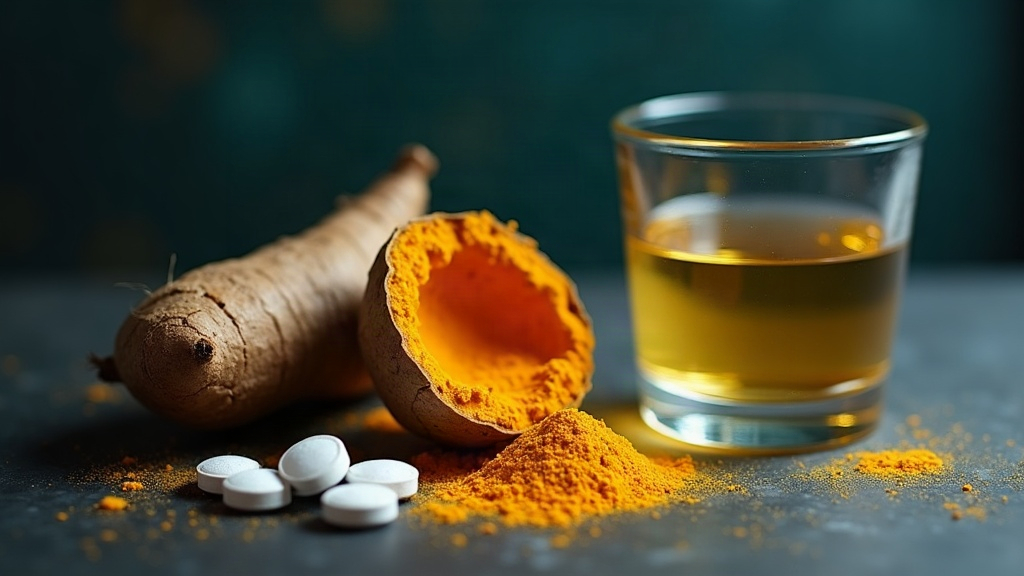

Turmeric's active compound curcumin has mild antiplatelet properties, and aspirin works by irreversibly inhibiting platelet aggregation. Taking both at the same time can stack these effects, raising the theoretical risk of bruising or bleeding. The combination is not forbidden, but it deserves a conversation with your doctor or pharmacist, especially if you take daily low-dose aspirin for cardiovascular protection or use higher-dose aspirin regularly for pain.
Turmeric and aspirin are two of the most widely used daily supplements and medications in the world. Both are taken for cardiovascular support, pain management, or general wellness, and both affect how blood platelets behave. That overlap is exactly why the question matters: what actually happens when you take them together?
The short answer is that there is a real interaction to be aware of, one that is generally manageable but not something to ignore, particularly if you take daily low-dose aspirin for heart health or use aspirin regularly for pain.
Why the Interaction Happens
Aspirin works by irreversibly inhibiting cyclooxygenase (COX-1) enzymes in platelets. This blocks the production of thromboxane A2, a compound that causes platelets to clump together and form clots. Because the inhibition is irreversible, a single dose of aspirin affects your platelets for their entire remaining lifespan, about 7 to 10 days.
Turmeric's active compound, curcumin, inhibits platelet aggregation through a somewhat different pathway: it reduces platelet activating factor (PAF) signaling and thromboxane synthesis, and it has mild effects on arachidonic acid metabolism. The net result is similar to aspirin's, but through different molecular steps.
Because these two antiplatelet mechanisms run partly in parallel and partly overlap, taking both at the same time can add to each other's effect rather than simply doubling a single pathway. This is sometimes called an additive interaction, and it is the core reason the combination warrants attention.
What the Evidence Actually Shows
Not sure if your supplements and medications play well together? Flexwell automatically checks your full stack for interactions, flags combinations worth knowing about, and gives you a clear list to bring to your doctor or pharmacist. Check your interactions →
Research specifically on the turmeric-aspirin combination in humans is limited. What we know comes from:
- In vitro (lab) studies confirming curcumin's antiplatelet effects at doses achievable with concentrated curcumin supplements (typically 500 mg or more per serving).
- Animal studies showing additive anticoagulant effects when curcumin and aspirin are combined.
- Clinical pharmacokinetic data showing that curcumin can inhibit CYP2C9 and other enzymes involved in aspirin and NSAID metabolism, potentially affecting how these drugs are processed.
- Case reports documenting unexpected bleeding in people taking curcumin supplements alongside antiplatelet or anticoagulant medications, though individual causality is difficult to establish.
There are no large, well-controlled human trials specifically measuring the combined effect of aspirin and turmeric supplementation on bleeding time or clinical outcomes. For that reason, this article is rated Moderate evidence: the biological mechanism is well-supported, but hard clinical data in humans is limited.
How This Compares to Other Anticoagulant Interactions
The turmeric-aspirin interaction is generally considered lower risk than turmeric combined with prescription anticoagulants like warfarin or Eliquis. The reasons:
- Aspirin's antiplatelet effect is already near maximal at the low 81 mg dose used for cardiovascular prevention, so the incremental additive effect from turmeric is added to a relatively modest baseline.
- Aspirin is not a full anticoagulant, it targets platelets only, not the clotting cascade, so the combined effect is narrower in scope than pairing turmeric with warfarin.
- The turmeric and blood thinners overview covers the full landscape across warfarin, Eliquis, Xarelto, and antiplatelet drugs. For those on prescription anticoagulants, the stakes are higher and the conversation with a prescriber is even more important.
That said, lower relative risk is not zero risk. People on daily aspirin therapy, particularly those who also have other bleeding risk factors such as a history of ulcers, older age, or concurrent NSAID use, should treat this interaction seriously.
Warning Signs to Watch For
If you take aspirin and add a turmeric supplement, or if you take turmeric regularly and start aspirin therapy, know the warning signs that the combination may be raising your bleeding risk:
- Bruising that appears more easily or more extensively than usual
- Cuts or minor wounds that bleed longer than expected before stopping
- Pink, red, or brown urine
- Black, tarry, or bloody stools
- Persistent nosebleeds that do not stop quickly
- Coughing or vomiting blood
- Unusual headache or sudden dizziness that does not resolve
These symptoms warrant same-day contact with your doctor or pharmacist, not waiting for your next scheduled appointment.
Timing and Dose Considerations
Spacing turmeric doses a few hours away from your aspirin dose may reduce peak-level overlap in your system. However, because aspirin's antiplatelet effect is irreversible and lasts for the lifetime of each affected platelet, timing alone does not remove the interaction risk.
What matters most is consistency and dose clarity:
- Taking a steady daily amount of turmeric is better than sporadic large doses, because consistent intake gives your body and your prescriber a predictable baseline.
- Culinary turmeric in food, such as a teaspoon in a curry or smoothie, delivers a fraction of the curcumin in a concentrated supplement. Culinary amounts are generally considered much lower risk.
- Concentrated curcumin supplements, especially those formulated with piperine or in liposomal form for higher absorption, deliver more curcumin and warrant more careful discussion with your prescriber.
When to Talk to Your Doctor or Pharmacist
Before starting a turmeric supplement if you already take daily aspirin. If you already take both and have not mentioned it, raise it at your next appointment or call the office. Pharmacists can quickly review your full medication list and identify whether the combination is a concern given your other risk factors.
Useful questions to bring:
- Is the form and dose of turmeric I am taking a concern alongside my aspirin regimen?
- Do I have other medications or conditions that increase my bleeding risk?
- Should I avoid high-dose curcumin supplements, or is culinary turmeric fine?
How Flexwell Can Help
If you log both your aspirin and your turmeric supplement in the Flexwell app, the app can flag the known interaction between them. This is part of the app's core use case: helping you see what is in your stack and where combinations deserve attention.
Beyond the alert, daily logging creates a timestamped record of exactly what you took and when. That record is concretely useful when you talk to your prescriber, replacing "I think I've been taking turmeric most days" with precise data. The app's stack feature is designed for exactly this kind of multi-supplement, multi-medication management.
Download Flexwell on the App Store: https://apps.apple.com/app/id6762058388
See also: Supplement and Medication Interactions You Should Know About
This article is for informational purposes only and does not constitute medical advice, diagnosis, or treatment. Always consult a qualified healthcare provider or licensed pharmacist before starting, stopping, or changing any medication or supplement. Individual results may vary. These statements have not been evaluated by the Food and Drug Administration. This product is not intended to diagnose, treat, cure, or prevent any disease.
Frequently Asked Questions
Is it safe to take turmeric and aspirin together?
There is a potential interaction to be aware of. Both turmeric (via curcumin) and aspirin inhibit platelet aggregation, so combining them can add to each other's blood-thinning effect and raise the risk of bruising or bleeding. This does not mean the combination is off-limits, but you should discuss it with your doctor or pharmacist, especially if you take daily low-dose aspirin for heart health.
Can turmeric replace aspirin as a blood thinner?
No. Turmeric should not be used as a substitute for aspirin or any prescribed antiplatelet therapy. Aspirin has a well-defined, irreversible antiplatelet mechanism and is prescribed at specific doses for specific cardiovascular indications. Turmeric's antiplatelet effects are milder, less predictable, and not a therapeutic replacement.
Does turmeric interact with low-dose aspirin?
Yes, potentially. Even low-dose aspirin (81 mg) fully inhibits platelet thromboxane production. Adding turmeric on top of that creates additive antiplatelet effects. The clinical risk is generally lower than with prescription anticoagulants like warfarin or Eliquis, but it is still worth discussing with your prescriber.
What are the warning signs that this combination is causing too much bleeding risk?
Watch for unusual bruising without a clear cause, cuts that bleed longer than expected, pink or brown urine, black or tarry stools, persistent nosebleeds, or coughing up blood. Any of these warrants same-day contact with your doctor.
Should I stop taking turmeric if I am on aspirin therapy?
That is a decision for your doctor, not this article. Many people take culinary amounts of turmeric alongside daily aspirin without incident. High-dose curcumin supplements are a higher-risk combination and warrant a direct conversation with your prescriber before starting.
Does timing matter when taking turmeric and aspirin together?
Spacing them apart by a couple of hours may reduce peak overlap, but it does not eliminate the underlying pharmacological interaction. Consistency matters more than timing: taking a steady daily amount gives your prescriber a stable baseline to assess, rather than unpredictable fluctuations.
Is culinary turmeric safer to combine with aspirin than a supplement?
Generally yes. A teaspoon of ground turmeric in food delivers a much smaller dose of curcumin than a concentrated 500 mg or 1,000 mg supplement. Culinary amounts are considered lower risk, though you should still mention your diet to your prescriber if you eat turmeric regularly.
Can Flexwell help me manage turmeric and aspirin together?
Yes. Log both your aspirin and your turmeric supplement in the Flexwell app and the app can flag the known interaction between them. Daily logging also gives you a timestamped record to share with your prescriber, which is more useful than trying to recall from memory what you took and when.
See what's actually working
Flexwell tracks your supplements and medications, connects your wearable data, and shows you the real impact on your sleep, energy, and recovery. Stop guessing, start seeing.
See your impactRelated reading
Can You Take Turmeric and Fish Oil Together?
Turmeric and Blood Pressure Medication: What to Know
Curcumin, the active compound in turmeric, has mild blood-pressure-lowering properties based on several small human…

Can You Take Turmeric With Ibuprofen or NSAIDs?
Turmeric's curcumin and NSAIDs like ibuprofen both inhibit COX enzymes that drive inflammation, meaning they work…