Can You Take Turmeric and Fish Oil Together?
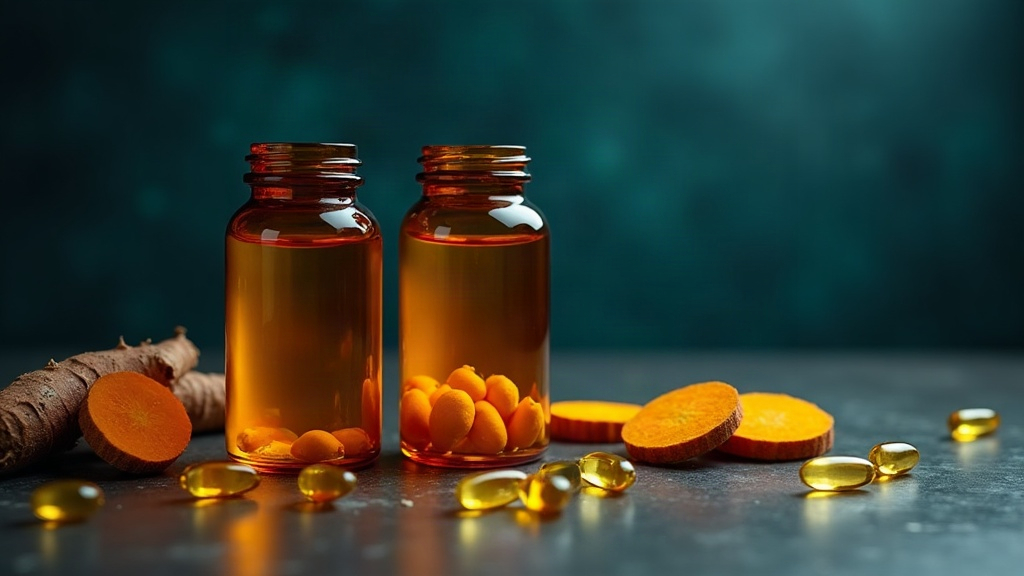
Turmeric and fish oil are two of the most researched anti-inflammatory supplements on the market. Both are commonly added to daily supplement routines, and people often wonder whether they can -- or should -- be taken together.
The short answer: yes, most people can take them together safely, and there may even be a complementary benefit. But there is one caution worth knowing before you combine them.
How does turmeric support inflammation?
Turmeric's active compound, curcumin, supports the body's normal inflammatory response primarily through the COX (cyclooxygenase) enzyme pathway. Research shows curcumin can modulate NF-kB, a signaling molecule that plays a central role in the body's inflammatory processes.
Curcumin also has mild antiplatelet properties -- it may influence how sticky platelets behave during clotting. This is relevant when stacking it with other supplements that work similarly.
How does fish oil support inflammation?
Not sure if your supplements and medications play well together? Flexwell automatically checks your full stack for interactions, flags combinations worth knowing about, and gives you a clear list to bring to your doctor or pharmacist. Check your interactions →
Fish oil delivers EPA and DHA, the omega-3 fatty acids derived from marine sources. These work through a different mechanism: the LOX (lipoxygenase) pathway. EPA in particular is a precursor to resolvins and protectins -- signaling molecules that help the body resolve inflammation, not just suppress it.
Omega-3s also have mild antiplatelet properties, which is why cardiologists sometimes recommend them for cardiovascular support.
Do turmeric and fish oil interact?
There is no known pharmacokinetic interaction -- they do not block each other's absorption, and they do not compete for the same receptors. From an absorption standpoint, both are fat-soluble, so taking them with a meal containing dietary fat helps both work better.
The more interesting question is whether they work together. Because curcumin targets the COX pathway and omega-3s target the LOX pathway, they hit inflammation through two different doors. Preliminary research has explored this dual-pathway approach, but direct clinical trials comparing the combination to either supplement alone are limited. The synergy hypothesis is plausible; the human evidence is still building.
What is the key caution?
The antiplatelet effect. Both turmeric and fish oil can mildly affect platelet aggregation. For healthy adults, this is not a meaningful concern at typical supplement doses. But if you are on a blood-thinning medication -- such as warfarin, Eliquis, Plavix, aspirin, or Xarelto -- the combined effect could be additive in a way that raises bleeding risk.
If you take any anticoagulant or antiplatelet drug, or if you have a bleeding disorder or are scheduled for surgery, talk to your doctor or pharmacist before adding both of these supplements to your routine. See our detailed article on turmeric and blood thinners for a deeper look at this interaction.
Are there any people who should avoid this combination?
Most healthy adults do not need to avoid it. However, extra caution is warranted if you:
- Take prescription blood thinners or antiplatelet medications
- Have a clotting disorder
- Are scheduled for surgery or a dental procedure in the next two weeks
- Are pregnant (fish oil is generally considered safe in pregnancy at typical doses, but high-dose curcumin is not well-studied in pregnancy)
When in doubt, run your supplement stack by a pharmacist. They can check for interactions across everything you are taking in a few minutes.
How should I take them together?
Both supplements absorb better with food containing fat -- a meal with healthy fats like olive oil, avocado, eggs, or nuts works well. Some practical notes:
- You do not need to take them at exactly the same time, but the same meal works fine
- If fish oil gives you a fishy aftertaste, splitting it across two meals can help
- High-dose curcumin supplements often include piperine (black pepper extract) or are formulated as phospholipid complexes to boost absorption -- follow the product directions
There is no evidence that taking them together reduces the effectiveness of either.
The Flexwell angle
If you track your supplements in Flexwell, logging both turmeric and fish oil lets the app monitor your full stack over time. As Flexwell builds toward a full Interaction Checker, logging combinations like this now means the app will be able to surface timing suggestions and flag relevant cautions automatically -- especially useful if you later add a medication that interacts with either.
You can also use the Flexwell journal to note whether you notice any changes in how you feel. With two anti-inflammatory supplements in your stack, it is worth tracking what is working.
For a broader look at which supplement pairings to watch, see supplements you should not take together.
This article is for informational purposes only and does not constitute medical advice. Always consult a qualified healthcare provider or pharmacist before starting, stopping, or combining supplements, especially if you take prescription medications. These statements have not been evaluated by the Food and Drug Administration. This product is not intended to diagnose, treat, cure, or prevent any disease.
Frequently Asked Questions
Can you take turmeric and fish oil together?
Yes, most people can take turmeric and fish oil together. Both support inflammatory balance through complementary pathways, and there is no evidence they interfere with each other's absorption. The main caution is their additive effect on platelet activity -- if you are on blood thinners or have a bleeding disorder, talk to your doctor first.
Do turmeric and fish oil work better together?
Preliminary research suggests they may complement each other. Curcumin in turmeric supports the COX pathway while omega-3s support the LOX pathway, so they target inflammation through different mechanisms. That said, direct clinical evidence comparing the combination to each alone is limited.
Do fish oil and turmeric thin the blood?
Both have mild antiplatelet properties in isolation. Taken together, that effect may be additive. For healthy adults not on blood-thinning medication, this is generally not a concern, but it is worth discussing with a clinician if you take warfarin, aspirin, Eliquis, Plavix, or other anticoagulants.
When should I take turmeric and fish oil -- morning or evening?
Both are fat-soluble and absorb better with a meal containing dietary fat. Taking them with lunch or dinner works well for most people. Some people prefer splitting fish oil across two meals to reduce the fishy aftertaste.
Is it safe to take turmeric, fish oil, and magnesium together?
Generally yes. Magnesium, turmeric, and fish oil do not have known adverse interactions. Many people take all three as part of a daily supplement routine. Check your total stack against your medications with a pharmacist if you are on prescription drugs.
How much turmeric and fish oil should I take?
Supplement doses vary by product. This article is informational, not a dosing guide. Follow the manufacturer's directions and consult a healthcare provider for personalized recommendations.
See what's actually working
Flexwell tracks your supplements and medications, connects your wearable data, and shows you the real impact on your sleep, energy, and recovery. Stop guessing, start seeing.
See your impactRelated reading
Turmeric and Blood Pressure Medication: What to Know
Curcumin, the active compound in turmeric, has mild blood-pressure-lowering properties based on several small human…

Can You Take Turmeric With Ibuprofen or NSAIDs?
Turmeric's curcumin and NSAIDs like ibuprofen both inhibit COX enzymes that drive inflammation, meaning they work…

Birth Control and Nutrient Depletion: What to Replace
Long-term use of hormonal birth control is associated with lower levels of folate, vitamins B6 and B12, magnesium…