Turmeric and Blood Pressure Medication: What to Know
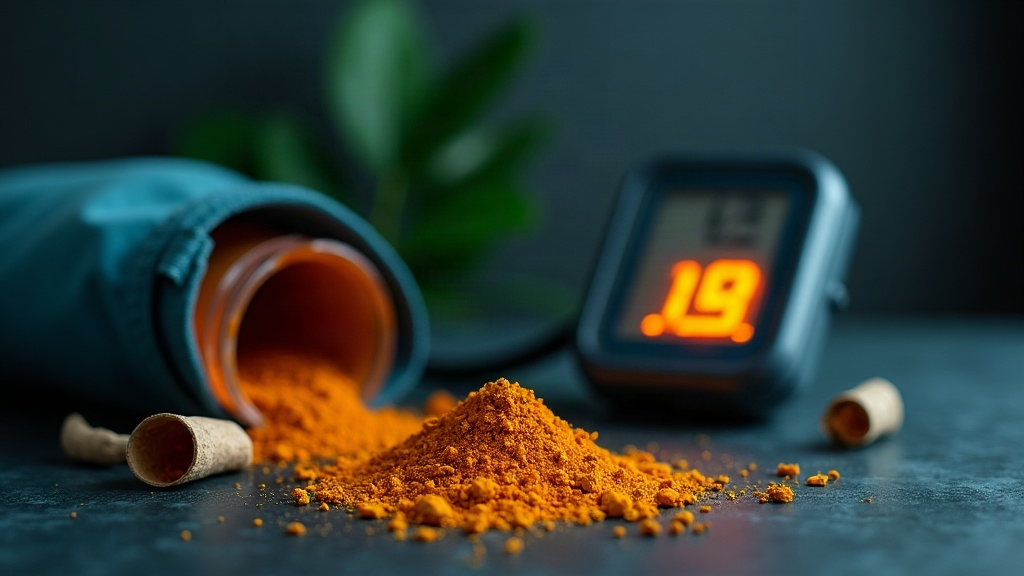

Curcumin, the active compound in turmeric, has mild blood-pressure-lowering properties based on several small human trials. This is not a problem when you are managing blood pressure with diet alone, but when combined with prescription antihypertensives, it may add extra lowering that pushes you below your target range. This is worth flagging with your prescribing doctor before you start turmeric or change your dose.
If you take a prescription blood pressure drug and you are thinking about adding turmeric, or you are already taking both, the interaction worth knowing about is not dramatic, but it is real enough to flag with your doctor. Turmeric has mild blood-pressure-lowering properties of its own. Add it on top of a medication that is already doing that job, and the combined effect could push you lower than intended.
Here is what the evidence actually shows, what to watch for, and how to have a useful conversation with your prescriber.
Why does turmeric affect blood pressure?
Curcumin, the active compound in turmeric, has been studied for cardiovascular effects in a handful of small human trials. The mechanisms researchers point to include reduced oxidative stress in blood vessel walls, improved endothelial function (how well the inner lining of vessels dilates and contracts), and modest effects on inflammatory pathways that contribute to vascular stiffness.
A 2019 meta-analysis of randomized controlled trials found that curcumin supplementation was associated with a statistically significant reduction in systolic blood pressure, though the effect sizes were small, typically in the range of a few millimeters of mercury. These are not the kind of numbers that would treat hypertension on their own, but they are not zero either.
The effect is dose-dependent. Cooking with turmeric is unlikely to move the needle. Supplement-grade curcumin at 500 mg to 2,000 mg per day is where the clinical trials were run, and that is also the range where the additive risk becomes more plausible.
What does the interaction look like with specific medications?
Not sure if your supplements and medications play well together? Flexwell automatically checks your full stack for interactions, flags combinations worth knowing about, and gives you a clear list to bring to your doctor or pharmacist. Check your interactions →
ACE inhibitors (lisinopril, ramipril, enalapril)
There is no well-documented direct biochemical conflict between curcumin and ACE inhibitors. The concern is purely additive: lisinopril is keeping your blood pressure at a target, and turmeric nudging it a few points lower could take you below that target. For most people this is mild. For someone already running at the low end of their target range, it may not be.
Calcium channel blockers (amlodipine, diltiazem, nifedipine)
This combination is worth a slightly closer look. Some preclinical research suggests curcumin has calcium channel-modulating activity at the cellular level. Whether this translates into a meaningful clinical effect in humans has not been adequately studied. Until that data exists, "unknown interaction potential" is the honest answer. Mention it to your pharmacist.
Beta-blockers (metoprolol, atenolol, carvedilol)
No major documented interaction with turmeric. Beta-blockers slow heart rate and reduce cardiac output to lower blood pressure. Turmeric's blood-pressure pathway is vascular (endothelial, inflammatory) rather than cardiac rate-focused, so the mechanisms are somewhat different. The additive effect is the main precaution here.
Diuretics (hydrochlorothiazide, furosemide, chlorthalidone)
If you are taking a diuretic and also potentially depleting electrolytes, adding a supplement with cardiovascular effects is another reason to keep your prescriber in the loop. The primary concern remains additive blood-pressure lowering, not a direct drug-curcumin chemical conflict.
ARBs (losartan, valsartan, olmesartan)
Similar profile to ACE inhibitors. No known direct interaction mechanism, but additive blood pressure effects are plausible with higher-dose curcumin. Worth a quick mention at your next appointment.
What the evidence actually shows
Honest summary: the data on turmeric and blood pressure medications in humans is thin. Most of the curcumin blood-pressure research involved participants who were NOT on antihypertensives, so there is limited direct evidence for what happens when you combine them.
What we know:
- Curcumin mildly lowers blood pressure in some trials (effect: small but real).
- Antihypertensive medications reliably lower blood pressure (effect: substantial and the whole point).
- Additive effects are biologically plausible.
- Serious or dramatic interactions have not been widely reported.
What we do not know:
- The exact magnitude of the combined effect across different drug classes and turmeric doses.
- Whether certain individuals are more sensitive to the combination.
Evidence rating for this article: Preliminary — the mechanistic rationale is solid, the human trial data for the combination specifically is sparse.
Signs your blood pressure may be running too low
If you start turmeric while on an antihypertensive and notice any of these symptoms, contact your doctor:
- Dizziness or lightheadedness, especially when standing up (orthostatic hypotension)
- Unusual fatigue or feeling faint
- Blurred vision
- Nausea without a clear cause
- Cold, clammy skin
These are not symptoms to dismiss. Hypotension can cause falls, reduce cognitive sharpness, and in some cases affect organ perfusion. They are also usually reversible by adjusting your supplement dose or medication timing.
Timing and spacing considerations
If you and your prescriber decide that turmeric is fine to continue, timing your doses apart from your blood pressure medication may help reduce the overlap of their effects. There is no specific evidence-backed timing protocol for this combination, but taking turmeric with a meal and your medication at a different time of day is a reasonable practical approach.
Turmeric absorbs best with fat and with black pepper extract (piperine). It does not need to be taken at any specific time of day from a pharmacokinetic standpoint.
When to talk to your doctor or pharmacist
Talk to your doctor or pharmacist before combining turmeric with a blood pressure medication if:
- You are just starting turmeric (bring it up at your next appointment or call ahead).
- Your blood pressure is already controlled and stable, and you do not want to disrupt that.
- You take multiple blood pressure medications, which compounds the additive risk.
- You monitor your own blood pressure at home — this makes the conversation easier because you will have data.
- You have diabetes alongside hypertension, since both conditions involve medications that can interact with curcumin.
Your pharmacist is an often-underused resource here. They have full visibility into your prescription history and can review interactions across your whole medication list in a few minutes.
How the Flexwell app can help
Flexwell lets you log both your supplements and your medications in one place. When you add turmeric and a blood pressure drug together, the app flags known interaction pairings and gives you a clear picture of your full stack, so you do not have to track it in your head.
The app can also send reminders if you want to separate the timing of your turmeric and your medication doses, and it makes it easy to share your logged stack with your doctor or pharmacist in one screenshot rather than trying to remember everything on the spot.
For a broader look at how supplements and medications can interact, see our guide to supplement and medication interactions. If you take turmeric and are also on blood thinners, the considerations are somewhat different and worth reading separately: turmeric and blood thinners.
This article is for informational purposes only. It is not medical advice and is not a substitute for the guidance of a licensed physician, pharmacist, or other qualified healthcare provider. Always consult your healthcare provider before starting, stopping, or changing any supplement alongside a prescription medication. Individual responses vary.
These statements have not been evaluated by the Food and Drug Administration. This product is not intended to diagnose, treat, cure, or prevent any disease.
Frequently Asked Questions
Can turmeric interfere with blood pressure medication?
Possibly. Curcumin has mild blood-pressure-lowering effects in human trials. Combined with prescription antihypertensives, it may lower blood pressure further than intended. This is usually a manageable interaction, but it is worth discussing with your prescribing doctor before combining them.
Does turmeric lower blood pressure?
Some small human trials suggest curcumin, the active compound in turmeric, supports modest reductions in systolic and diastolic blood pressure. The effect appears to be mild and works best alongside other healthy habits. It is not a replacement for medication.
Is it safe to take turmeric with lisinopril?
There is no well-documented direct chemical interaction between turmeric and lisinopril. The concern is additive blood pressure lowering. If your lisinopril dose is already keeping you at your target, adding turmeric could nudge you too low. Check with your doctor or pharmacist.
Can I take turmeric with amlodipine?
Amlodipine is a calcium channel blocker. Some research suggests curcumin may affect calcium channels at the cellular level. The clinical significance of this combination in humans has not been well studied. Talk to your pharmacist before starting turmeric alongside amlodipine.
Can turmeric interact with beta-blockers?
There is no major documented interaction between turmeric and beta-blockers like metoprolol or atenolol. The main consideration is additive blood-pressure and heart-rate effects if turmeric contributes mild cardiovascular support. Mention it to your prescriber as a precaution.
What are the signs that my blood pressure has dropped too low?
Symptoms of hypotension (low blood pressure) include dizziness, lightheadedness, blurred vision, nausea, feeling faint when you stand up, and unusual fatigue. If you notice any of these after starting turmeric alongside your medication, contact your doctor promptly.
How much turmeric triggers an interaction?
Food-level turmeric in cooking is unlikely to cause problems. Supplement doses of 500 mg to 2,000 mg curcumin daily are the range where interactions become more plausible. The higher the dose, the more relevant it is to flag with your prescriber.
Can the Flexwell app help me manage this combination?
Yes. Flexwell lets you log your supplements and medications together. The app can flag known interaction pairings and send reminders about timing your doses if spacing helps reduce overlap. It is designed for exactly this kind of day-to-day stack management.
See what's actually working
Flexwell tracks your supplements and medications, connects your wearable data, and shows you the real impact on your sleep, energy, and recovery. Stop guessing, start seeing.
See your impactRelated reading

Can You Take Turmeric and Fish Oil Together?

Can You Take Turmeric With Ibuprofen or NSAIDs?
Turmeric's curcumin and NSAIDs like ibuprofen both inhibit COX enzymes that drive inflammation, meaning they work…

Birth Control and Nutrient Depletion: What to Replace
Long-term use of hormonal birth control is associated with lower levels of folate, vitamins B6 and B12, magnesium…