Are Greens Powders Worth It? A Look at the Evidence
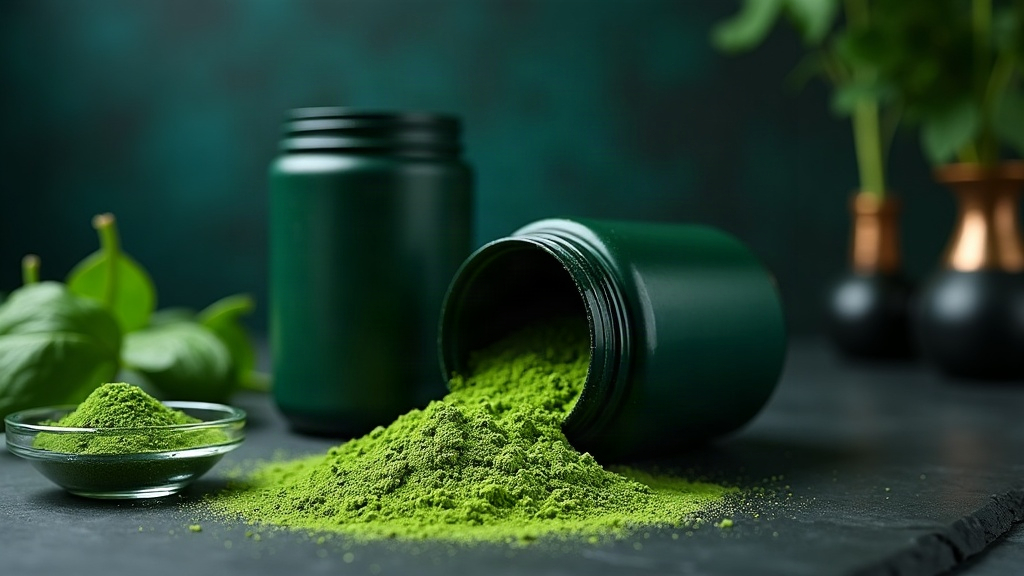

Greens powders can fill minor micronutrient gaps and provide antioxidants and phytocompounds, but the evidence does not support them as a replacement for whole vegetables. Absorption of nutrients from dried, concentrated powders is generally lower than from fresh produce. They are useful as a complement to a diet that mostly covers its bases, not a substitute for one that does not.
Greens powders have become one of the fastest-growing supplement categories, with products like AG1 (formerly Athletic Greens), Amazing Grass, and dozens of competitors promising a shortcut to your daily vegetables. The marketing typically positions them as insurance against a less-than-perfect diet. The honest answer about whether they deliver on that promise is more complicated.
What Greens Powders Actually Contain
Most greens powders blend some combination of:
- Leafy greens (spinach, kale, broccoli, wheatgrass, barley grass), dried and concentrated
- Algae (spirulina, chlorella), often in meaningful amounts
- Fruit and vegetable concentrates for antioxidant content
- Probiotics and digestive enzymes, typically in smaller doses than dedicated products
- Adaptogens and mushrooms (ashwagandha, lion's mane, reishi), often in trace amounts
- Vitamins and minerals, sometimes added directly to fill out the label
The problem with evaluating these products is that many use proprietary blends, meaning they list ingredients but not individual doses. When a label says "Greens Blend: 2,000 mg" and lists ten ingredients, you have no way to know if spirulina is 1,800 mg or 20 mg. This makes it difficult to compare products or evaluate whether any ingredient is present in a clinically relevant amount.
What Does the Research Actually Show?
Not sure if your supplements and medications play well together? Flexwell automatically checks your full stack for interactions, flags combinations worth knowing about, and gives you a clear list to bring to your doctor or pharmacist. Check your interactions →
Evidence for whole-food greens
Fresh vegetables provide a matrix of nutrients, fiber, water, and phytocompounds that work together in ways researchers are still mapping. The fiber in whole vegetables slows digestion, feeds gut bacteria, and produces short-chain fatty acids with downstream health effects. Cooking or processing vegetables changes this matrix, and drying concentrates some compounds while degrading others.
The evidence for whole vegetable consumption as a driver of health outcomes is among the strongest in nutrition science. This is not meaningfully contested.
Evidence for greens powders specifically
Here the picture is murkier.
A handful of controlled trials suggest that greens powder supplementation can produce modest improvements in blood pressure, blood antioxidant markers, and micronutrient status in people whose baseline diets are low in vegetables. A 2009 randomized trial published in the Journal of Chiropractic Medicine found that a fruit and vegetable concentrate powder reduced systolic and diastolic blood pressure in hypertensive adults over 90 days.
However, most of these trials are small (20 to 100 participants), short in duration, and frequently funded by the companies making the products. Industry funding does not automatically invalidate research, but it is a meaningful flag when assessing effect sizes.
Spirulina and chlorella individually have a more robust evidence base than most blended superfood powders. Spirulina shows consistent effects on antioxidant status and some lipid markers in multiple independent trials. Chlorella has shown modest benefits in detoxification-related outcomes and immune markers. If these are the reason you are considering a greens powder, products that disclose meaningful doses of these two ingredients are worth more consideration.
Bioavailability: the honest problem
Drying and concentrating vegetables degrades heat-sensitive nutrients, particularly vitamin C and some B vitamins. Fat-soluble compounds like beta-carotene may be better absorbed if the powder is consumed with fat, but absorption still tends to be lower than from whole food sources. The physical structure of the vegetable cell, which slows digestion and modulates nutrient release, is gone in a powder.
The practical takeaway: if a greens powder provides 20 percent of the vitamin C in a label serving, the amount your body actually absorbs from that dried form may be less than from an equivalent raw serving of spinach.
What Greens Powders Cannot Do
Replace fiber. Most greens powders provide 1 to 3 grams of fiber per serving, far below the 25 to 38 grams recommended daily and far below what a vegetable-rich diet delivers naturally. Fiber is one of the most evidence-backed dietary components for gut health, cholesterol, and satiety.
Replace eating variety. Whole produce delivers hundreds of phytocompounds that are not captured in a standardized powder. The specific matrix of compounds in broccoli, for instance, interacts with gut bacteria differently from the same broccoli dried and powdered.
Fix a poor diet. A greens powder cannot compensate for consistently low vegetable intake the way marketing sometimes implies. The long-term health data associated with vegetable consumption comes from studies of whole-food dietary patterns, not from powdered supplement studies.
Where Greens Powders Might Actually Help
They are most useful in these specific situations:
Filling genuine gaps. If your diet is mostly solid but you frequently miss two or three servings of vegetables, a greens powder can provide a micronutrient buffer. This is different from trying to replace all vegetables with a powder.
Travel and disruption. When routines break down, having a greens powder as a fallback is a reasonable strategy. Eating well on the road is harder; a supplement filling in for a few missed vegetable days is better than nothing.
People who struggle with vegetable palatability. For some people, finding any consistent way to get more phytonutrients into their diet is the goal. A greens powder they will actually use beats a vegetable they will not.
As part of a supplement stack with spirulina or chlorella. If you specifically want the evidence-supported benefits of spirulina, a high-spirulina powder may be more convenient than buying spirulina tablets separately.
What to Look for If You Buy One
If the evidence resonates and you want to try a greens powder:
- Demand disclosed ingredient doses. Avoid proprietary blends where you cannot see how much of anything is actually in the product.
- Look for meaningful spirulina and/or chlorella content (1 to 3 grams is a reasonable target for these specifically).
- Skip the adaptogens and mushroom extracts if they are in trace amounts. A 50 mg ashwagandha dose in a proprietary blend is not doing anything.
- Ignore most marketing claims around "superfoods," "alkalizing," and similar terms. These are not supported by the evidence in any meaningful way.
- Check for third-party testing (NSF Certified for Sport, Informed Sport, or USP). This confirms what is on the label is actually in the product.
Drug and Supplement Interactions to Know
If you take blood thinners like warfarin (Coumadin), this matters: greens powders are often high in vitamin K, which directly counteracts warfarin's anticoagulant effect. Adding or removing a greens powder from your routine can shift your INR in ways your prescriber needs to track.
Chlorella at higher doses has some evidence of interaction with immunosuppressant drugs. If you are on prescription medications of any kind, tell your pharmacist before adding a greens supplement, not after.
How Flexwell Can Help
If you are adding a greens powder to your supplement stack, logging it in the Flexwell app keeps your full picture in one place. The stack view lets you see everything you take alongside your medications, which is useful when discussing your routine with a healthcare provider or pharmacist.
For people on blood thinners or other medications where diet and supplements interact with drug dosing, having a consistent log is more than organizational; it gives your care team something to work with.
You can download Flexwell on the App Store: https://apps.apple.com/app/id6762058388
This article is for informational purposes only and does not constitute medical advice, diagnosis, or treatment. Always consult a qualified healthcare provider or licensed pharmacist before starting, stopping, or changing any medication or supplement. Individual results may vary. These statements have not been evaluated by the Food and Drug Administration. This product is not intended to diagnose, treat, cure, or prevent any disease.
Frequently Asked Questions
Are greens powders worth taking?
They can be useful as a complement to an otherwise solid diet, particularly for filling minor gaps in vegetable intake. However, the evidence does not support them as a replacement for whole vegetables. Nutrient absorption from powders is generally lower than from fresh produce, and many products contain proprietary blends without disclosed doses.
Can greens powders replace vegetables?
No. Whole vegetables provide fiber, water content, physical structure, and a matrix of nutrients that work together in ways dried powders cannot replicate. Greens powders can supplement a mostly-good diet, not stand in for one that is missing vegetables entirely.
Do greens powders actually have health benefits?
Some studies show modest improvements in blood pressure, antioxidant markers, and micronutrient status. The quality of evidence is mixed, most trials are small and industry-funded. Spirulina and chlorella have stronger standalone evidence than most blended superfood powders.
What ingredients should I look for in a greens powder?
Look for products that disclose actual ingredient doses rather than hiding behind proprietary blends. Spinach, kale, spirulina, chlorella, and wheatgrass have the most research behind them. Avoid products loaded with adaptogens and mushroom extracts in trace amounts, since those doses are typically too small to have any effect.
Are greens powders safe to take with medications?
Greens powders can interact with some medications. Products containing vitamin K-rich greens like spinach and kale can affect warfarin (Coumadin) dosing. High chlorella doses may affect some drugs. Always mention any greens supplement to your pharmacist or prescriber, especially if you take blood thinners or other prescription medications.
When is the best time to take a greens powder?
Most are best taken in the morning with a meal or mixed into a smoothie. Taking them with food improves tolerance and may improve absorption of fat-soluble compounds. There is no strong evidence for a specific optimal timing for most people.
How does Flexwell help with greens powder tracking?
You can log your greens powder in the Flexwell app alongside your other supplements and meals. If you take a greens powder while also using blood thinners or other medications, the app's stack view helps you keep track of everything in one place and flag combinations worth discussing with your pharmacist.
See what's actually working
Flexwell tracks your supplements and medications, connects your wearable data, and shows you the real impact on your sleep, energy, and recovery. Stop guessing, start seeing.
See your impactRelated reading
The Truth About Electrolyte Supplements and Hydration
Electrolyte supplements make sense for prolonged exercise (90+ minutes), heavy sweating, or recovery from illness. For…
Berberine vs. Metformin: Is "Nature's Ozempic" Actually Comparable?
Berberine and metformin share the same core mechanism, AMPK activation, and one small 2008 trial found comparable blood…
BPC-157 and the FDA Vote: What It Actually Means (And What It Doesn't)
The July 2026 FDA advisory committee voted 8-6 to recommend BPC-157 for limited prescription compounding, not retail…